
Our History
St Laurence sits above the High Street on a site of Christian worship believed to date from the mid 1200s. For generations, local people have gathered here to celebrate life’s most meaningful moments — from weddings and music to remembrance and reflection. This building holds our shared stories.
The building that stands today was completed in 1906, replacing an earlier church built 1774-76, which had itself replaced an earlier building. In 1895, worshippers presented a petition to the Kirk Session complaining of the insanitary state and physical discomfort of their church. A It was clear that despite a new slate roof replacing the old thatch, the old church was no longer fit for purpose.
By 1901, enough money had been raised through fundraising, legacies, subscriptions and local appeals to begin work and hold an architectural competition. Of the three entries, the one chosen was by John Robertson of Inverness and construction began in summer 1904.
The new church with its 120 feet high spire was built in sandstone from Newton Quarries near Elgin and completed at a final cost of £9600 including £1500 from local philanthropist Lord Strathcona. The opening of St Laurence on Ash Wednesday, 28th February 1906 was a grand event in the history of Forres.
Click the images below to view historic images of St Laurence Church

Builders who worked on St Laurence Church, 1904

St Laurence Church

Postcard, St Laurence Church, 1922

St Laurence Parish Church, Steeplejacks at work circa 1958
What Makes St Laurence unique?
St Laurence is an iconic building standing tall above the centre of Forres, its stone steeple is a beloved landmark on the town’s skyline. The building’s grand architecture and beautiful acoustics make it a fantastic venue for music, concerts and performance. The spacious light interior has an ornate pitch pine timber ribbed ceiling and a soaring arcade of columns divides the nave from the north aisle.
The galleries house a three manual pipe organ specially made for the building by acclaimed designer Ernest Henry Lawton on Aberdeen and installed in 1905.
St Laurence’s distinct look gives it the air of a cathedral with a special atmosphere of peace and beauty.


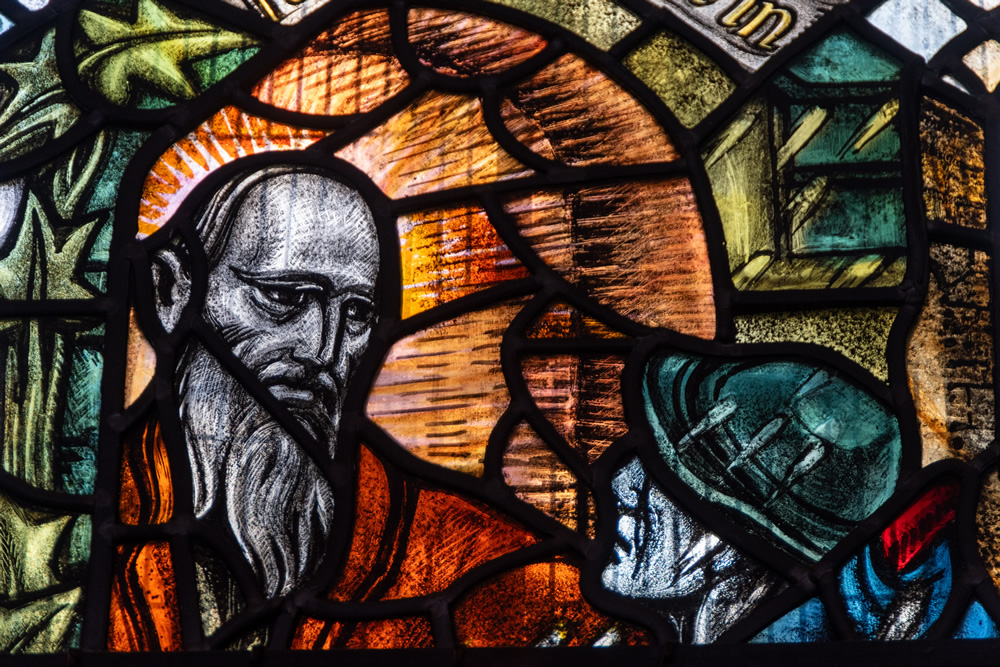
Douglas Strachan
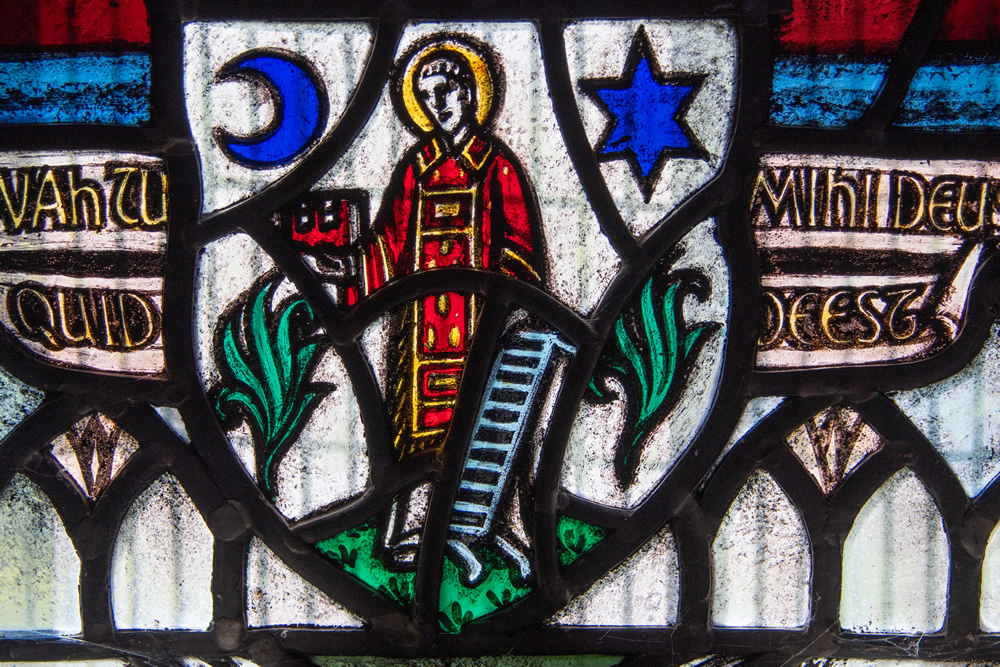
Robert Douglas Strachan (1875–1950) was Scotland’s leading stained glass artist of the twentieth century. St Laurence is home to his largest collection of work.
Born in Aberdeen, Strachan studied fine art at Gray’s School of Art and later at the Royal Scottish Academy in Edinburgh. Strachan spent some of his early career in Manchester working as an artist and political cartoonist where he learned stained glass techniques. In 1909, he founded the stained glass department at Edinburgh School of Art, leaving in 1911to focus on commission work.
By 1929, Strachan was internationally recognised. His major works include windows at the Peace Palace in The Hague and the Scottish National War Memorial at Edinburgh Castle. His stained glass can be seen in churches and cathedrals across Scotland and England. His work is known for strong, sculptural designs and bold, jewel-like colours.
St Laurence’s windows were commissioned by Lord Strathcona in the 1930s and form the largest collection of Douglas Strachan’s work.






The Charity
St Laurence Forres Trust is a charity formed to secure the future of the iconic St Laurence church in Forres with a mission to create a vibrant, accessible, and welcoming venue for arts, culture, community and connection.
The charity is led by a team of local people with a bold and hopeful vision to preserve and transform this historic building into a vibrant community and arts space for the benefit of the local community.